Objectives and Implementation
Project objective
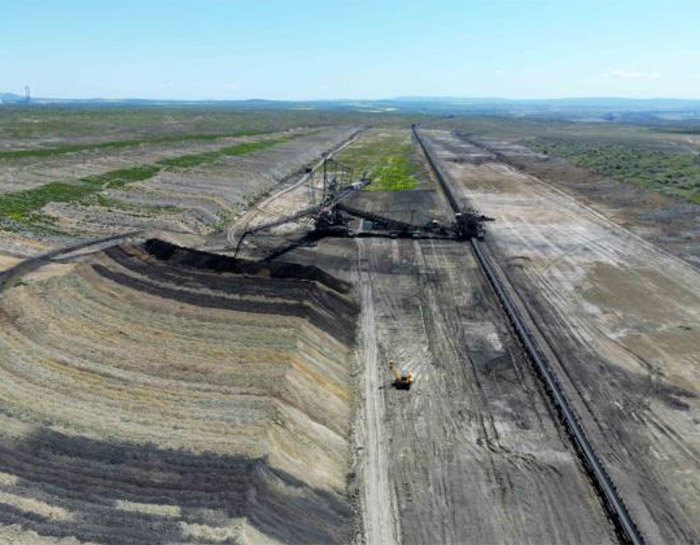
 The main objective of this project is to demonstrate, at technology readiness level 6 – 7, the possibility of producing new construction materials with improved performance properties using high percentages of waste clays from the Mines of Maritsa-Iztok EAD, with the addition of other waste raw materials such as ashes from thermal power plants, waste glass crumbs and/or glass wool and water glass obtained from various waste raw materials.
This is a prerequisite for modifying existing technologies for the production of ceramic and geopolymer materials and/or creating new ones, which will allow the use of large quantities in multi-ton production.
Another important objective of the Project is to support local communities through investments in energy efficiency, support for jobs, training and retraining of people in the renewable energy production sectors, as well as other activities involving SMEs and projects in the field of research and innovation. An important part of these will be aimed at supporting the change of use of parts of the coal mining areas, attracting new investments and providing opportunities for retraining and entrepreneurship for the workers affected. To achieve this, it is important to accelerate the deployment of new products and practices and enable technology transfer from research projects to support the transition to a circular economy and provide alternative pathways for employees, management, and partners.
The project starts at Technology Readiness Level (TRL) 4 – Technology validated in a lab and, by the end of its implementation, should reach TRL 7 – System prototype demonstration in an operational environment (Fig. 3).
Project implementation is organized into Work Packages (WPs). The project work plan consists of 7 Work Packages:
| Work Packages | Name of the leading partner (responsible for the implementation) |
| 1 | Characterisation and sampling of raw materials (MMI with the subcontractor IMC) |
| 2 | Process optimisation and material synthesis (start TRL 4) (UNIMORE) |
| 3 | Demonstration and (scale up) pilot plant experiments (end TRL 7) (MMI with the subcontractor IPC) |
| 4 | Civil works, design and construction of new pilot facilities, purchase of new equipment (MMI) |
| 5 | Work conditions, reskilling and upskilling (MMI) |
| 6 | Innovation, Dissemination, Exploitation, Communication, Outreach (MMI with the subcontractor IPC) |
| 7 | Project management and coordination (MMI) |
Development activities will begin with WP 1 and 2, starting from Technology Readiness Level (TRL) 4 – Technology validated in a lab.
Work Package 1 (WP 1): The project begins with taking samples of clays (different types of clays extracted from various mining places and different depth) and providing of additives (ash from thermal power plants) by MMI and sending them to BAS and the Italian university UNIMORE for research. BAS and UNIMORE conduct analyses, research, etc., combining different types of clays with different types of additives to obtain ceramic materials and geopolymers. The work will be focused on improving the processes, characterizing the best formulations from a physical, chemical, and mechanical point of view to increase the TRL to 7 – System prototype demonstration in an operational environment.
Work Package 2 (WP 2): In order to optimize the synthesis of materials, the physical, thermal insulation, sound insulation, and other properties of the obtained materials will be investigated. At the laboratory level, several suitable compositions and modes for their production must be selected and optimized. The samples obtained will be further investigated to refine the composition-structure relationships, heat treatment mode – degree of sintering or foaming, and others, in order to select those with the best performance (strength, durability, thermal stability, and water resistance) and most suitable for use in construction. The size of the samples will be increased in order to produce materials ready for WP 3.
 Work package 3 (WP 3): Next, work will focus on the materials with the best performance – scaling up their production to demonstrate their suitability in construction, and to see how competitive their production can be. In the final pilot tests of TRL 6 and 7 for the ceramic materials, it is planned to use a modular pilot tunnel furnace already built at BAS, which allows easy change of firing temperatures and times during operation. This is an important prerequisite for conducting successful pilot experiments, which cannot be carried out in industrial conditions. On the other hand, it will be proven that the compositions and regimes specified at the pilot level are subsequently applicable in real industrial conditions. For the implementation of pilot experiments with geopolymer materials, a site for obtaining geopolymer materials, as well as for the production of water glass from suitable local waste raw materials, is planned to be built on the territory of “Mini Maritsa Iztok” EAD (MMI).
This transition from laboratory-scale experiments to pilot plant demonstrations (scale up), bringing the technology closer to commercialization is necessary in order to prove the applicability of the developed processes and materials in real industrial settings. Pilot plant experiments aim to replicate industrial conditions and ensure that the results obtained are scalable and applicable in industrial production scenarios.
Work package 4 (WP 4): For the purposes of Work Package 3, pilot facilities and the relevant equipment will be needed.
The ceramic materials will be fired in a furnace available at BAS. For the implementation of pilot experiments with geopolymer materials, a site and transport infrastructure will be built on the territory of Mini Maritsa Iztok EAD, with several pilot installations, as follows:
- A laboratory for researching the physical-mechanical properties of new materials;
- A pilot plant for the production of water glass, as an additive for the synthesis of geopolymers and new foam materials;
- A closed room (building) with a dryer/wet room for aging molded geopolymer products;
- A kiln for calcining clays from the so-called flash calciner type.
The laboratory tests of the received samples will be carried out by the operational and research staff on the territory of BAS in Sofia, as well as on the future site for the implementation of the project on the territory of “Maritsa Iztok” complex. The clay calcination plant will be using the flash method, and furnaces (incl. microwave) for clay activation.
WP4 will focus on the construction, operation and development of pilot plants of appropriate scale and using appropriate components, to verify the practical applicability of laboratory results from WP 1 and 2 in WP 3. This will provide additional technical and economic data that are crucial for transition to an industrial stage and establishing an independent company after the project is completed in the PRIMI+ period.
Work package 5 (WP 5): A retraining course is planned to be organized and conducted for part of MMI staff. In this way, a number of current MMI workers can be redirected to work in the pilot facilities. After the end of the project, they will continue working in the scaled-up facility for production of construction materials.
Work package 6 (WP 6): During the Project implementation, promotion of the Project is planned, and in its later stages (after the second year of implementation) – dissemination of its results. For this purpose, participation with reports and presentations is planned at a number of scientific conferences in Bulgaria and abroad, media publications, specialized publications, etc.
Work package 7 (WP 7): The management and coordination of the Project takes place throughout the period of its implementation and will be the responsibility of „Mini Maritsa Iztok“ EAD as a coordinator.
Advantages of the new construction materials
Throughout the process of synthesis of the new materials, the physical, thermal insulation, sound insulation and other properties of the obtained materials are studied and those with the best performance and most suitable for use in construction are selected. This will ensure their quality and suitability.
In addition to the improved properties of the new construction materials, another essential advantage is the significantly reduced amount of carbon emissions released during their production. This is due to the absence of limestone decarbonisation (which is the reason for the high carbon emissions in the production of Portland cement-based concrete) and the significantly lower temperature required for the hardening of geopolymers.
Towards industrial application – PRIMI+ period
Once the applicability of the clays and the competitiveness of the resulting building materials have been proven, the pilot installations can be expanded and supplemented, and the work started with this project can be scaled up to larger-scale production, providing employment for more people.
In conclusion
The project represents:
- A GOOD EXAMPLE OF CIRCULAR ECONOMY;
- INNOVATION;
- OBTAINING NEW MATERIALS WITH SIGNIFICANTLY REDUCED HARMFUL EMISSIONS;
SUPPORT FOR LOCAL COMMUNITIES THROUGH THE CREATION OF NEW JOBS.

